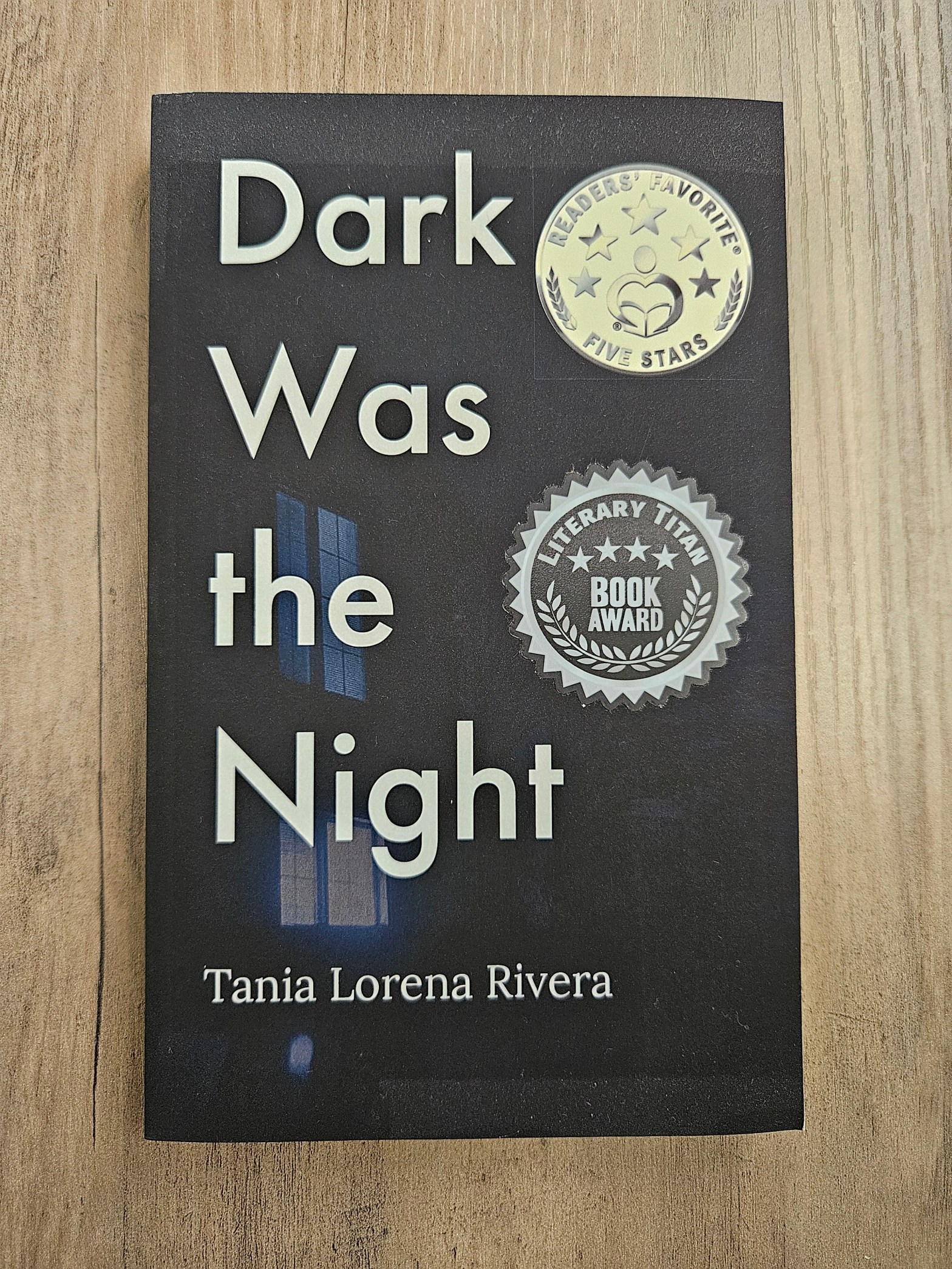
This fall, it will be five years since I self-published my first book, Dark Was the Night. My plan is to re-release it in October with a new cover and a brand-new revised edition. Which is funny, because I think maybe fifty people were gracious enough to read it. Still, it’s a milestone, and it should be marked as such.
I have to be honest with you: like every author who has ever put their work out there, I expected much more than just tiny ripples in the water. I expected waves. It’s delusional. We’re sold on the idea that if we put a book out there, we will all have our Stephen King moment or our J.K. Rowling moment or our Stephanie Meyer moment. God forbid any of us has our E.L. James moment. Trust me. As a writer, you want your stories to resonate with the soul, not our basic instincts. But if that’s the hand you were dealt, and it sells. Then by all means, write the filthiest thing you can think of, because the masses love it!

I don’t know when I finished writing my second book. Maybe a year ago. Maybe more. I haven’t been consistently sending it in to agents until recently, and even then, I’ve been slacking. If I thought my first book was a hard sell due to its length (only 45,000 words) and its graphic content and vulgar language, this one is another beast entirely. The story is loosely based on my grandmother’s story in El Salvador. Yeah, I know. Good luck with that, right? But I feel her story is that of many women, transcending time and space.
I’ve been pitching it to several agents for months now, and still no bites. This is a fictional historical family drama, and it’s 70,000 words long. Still, maybe a bit under for the genre, but I hate padding for the sake of hitting an arbitrary number the industry says will sell more easily. I don’t listen to the hype. I trust my instincts as a writer. Maybe that’s a mistake, but I won’t compromise the integrity of the story by adding artifice.

I don’t know how much longer I will keep pitching it before I give up, curl up in a fetal position and cry, and end up publishing it myself. But I feel this book deserves a traditional publishing route. But what do I know?
One interesting thing, though, is that I’ve been sending parts of it to small publications that charge a fee to read your work. And as luck would have it, I’m reading On Writing by Stephen King. King spends about 30% of the book retelling how his love for writing began, his humble beginnings, and how Carrie was his big break. He admitted to having padded his novel with “epistolary interludes” (diary entries, letters, bulletins, etc.) and such to hit that coveted word limit agents love so much. One thing I learned from reading about his childhood: Mr. King may be the authority on writing horror, but he’s also very funny! About 65% percent of the book is him genuinely giving good advice on writing. I kid you not, his advice is solid, and I recommend this book as much as Show, Don’t Tell: A Writer’s Guide by William Noble and The Elements of Style by Strunk and White, which every aspiring writer should read. The rest of the book is him retelling his horrific accident back in 1999. I’m still in the middle of reading that, and he’s lucky to be alive! The paramedic who rode with him in the back of the ambulance told him months later he didn’t think King would make it to the hospital. Again, I can’t recommend this book enough.
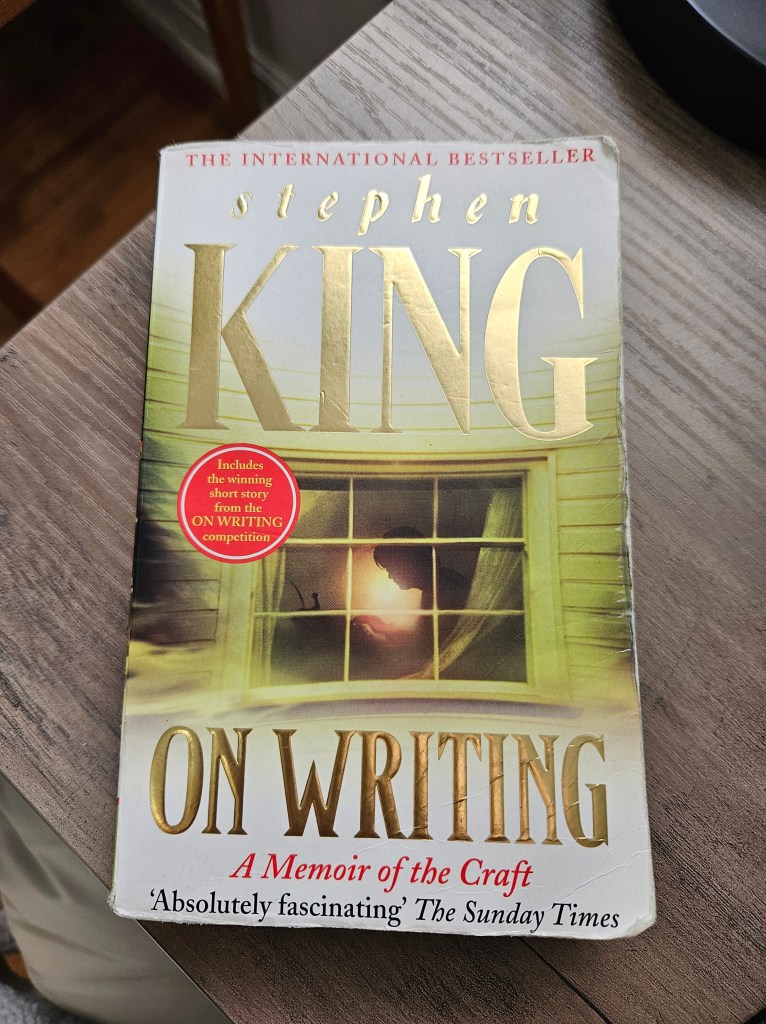
King says something that many of us who have written since a young age knew all along: you don’t need formal training to be a good writer. But you do need competency. And competency can’t be taught. You can’t learn it in any writing class. There is no secret formula hidden in any book. You’re either a competent writer or you’re not, and only through grit and grime can you become a good writer. King doesn’t mince words: he says you can turn a ‘competent’ writer into a ‘good’ one through hard work and discipline. But you cannot turn a ‘bad’ writer into a ‘competent’ one, nor can you ‘teach’ the raw, innate talent that makes a ‘great’ writer. He goes on to say, a ‘good’ writer cannot become a ‘great’ one. Great writers are born, not made.
He also offers advice on writing your query letters, what to say, and who to query. He’s adamant that you should never query any agent or publication that charges a fee to read your material. In his own words: “You should be especially wary of agents who promise to read your work for a fee. A few such agents are reputable […], but all too many are unscrupulous fucks. I’d suggest that if you’re that anxious to get published, you skip agent-hunting or query-letters to publishers and go directly to a vanity press. There you will at least get a semblance of your money’s worth.” And I smiled from ear to ear reading this. The tears, blood, and sweat I spent submitting to publications that charge a fee, have ridiculous submission guidelines, and require an account, a username, and a password to send in your manuscript. You need to subscribe, have read at least ten of their books, and specify which of their books most resembles your manuscript. King is right. All that work, and all that money, and nothing to show for it. Years ago, an agency charged me $3,000 US to publish my book. For all the money I’ve spent over the years submitting to places that charge a fee, I might as well have published with them and have my novel under a label.
So, to circle back to how long I will try to submit my second book to an agent. Ironically enough, the simple fact that I have this blog, My Foolish Quest to Get Published, I’m probably shooting myself in the leg. But I’ll give it till Christmas. Then, I’ll self-publish. No shame in that. Not everyone gets to ride the pony; some of us get to trail behind the cart, swallowing dust and coughing up a storm. At the end of the day, we’re all getting to the same place.

 My Foolish Quest to Get Published