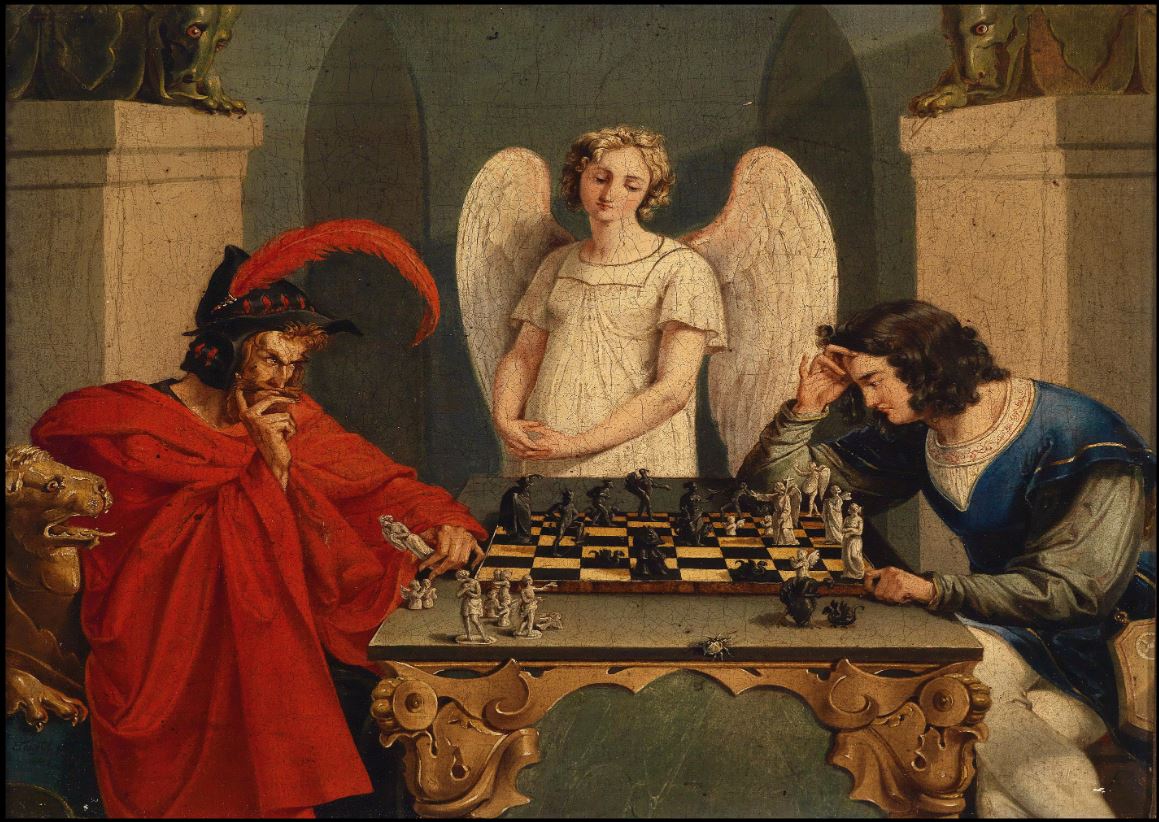
Scrolling through YouTube one day, as one does, I came upon a video of a preacher telling his congregation a story I’d heard many times but never paid much attention to before.
The preacher was telling the story of a famous painting in the Louvre called Checkmate, depicting the Devil playing chess against a man while an angel stood watching. The Devil is laughing, and the man looks on in desperation at the board, perhaps knowing he’s lost. The preacher continued the story by saying that one day a famous chess master visited the Louvre, stopped at the painting, analyzed the game, and said: “Well, the king has one more move.” The message is one of hope: that even when you think you’re cornered, there is always a way out. In the preacher’s message, it was implied that the way out was through faith and through God.
And the immediate thought that came to my head, as an occasional chess player myself, was this one: Yes, but does that move put him in checkmate, therefore sealing his doom? The painting can’t be called Checkmate for nothing.
So, I decided to do a little digging, or a little Googling, if you will, and I found out that the story is not entirely true.
There is no painting in the Louvre called Checkmate. In fact, the original work this story is inspired by is not a painting at all. There are 19th-century engravings/prints by the German artist Friedrich Moritz August Retzsch titled Die Schachspieler (The Chess Players). The scene illustrates Faust playing against Mephistopheles (yes, the same demon as in Ghost Rider), inspired by Johann Wolfgang von Goethe’s work Faust.
Mephistopheles is an ambiguous character, for in many different interpretations, he is portrayed as the Devil himself. In the interest of clarity, and to mirror the preacher’s message, I will simply refer to him as the Devil, even though in Goethe’s work, he is the demon Mephistopheles.
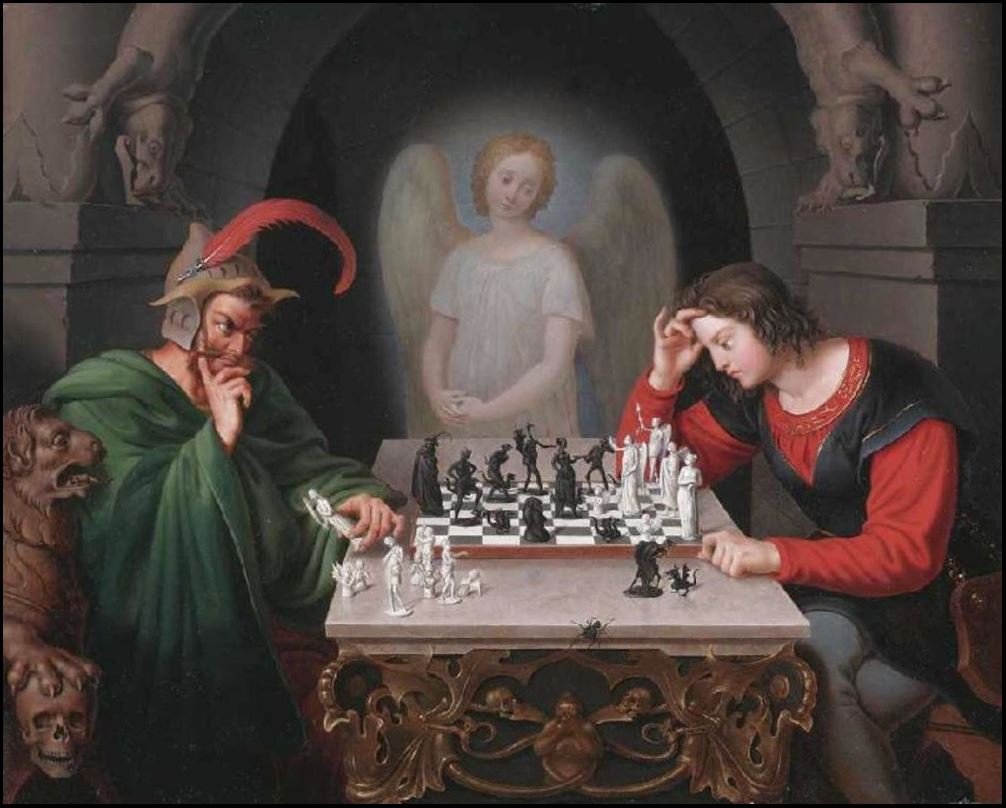
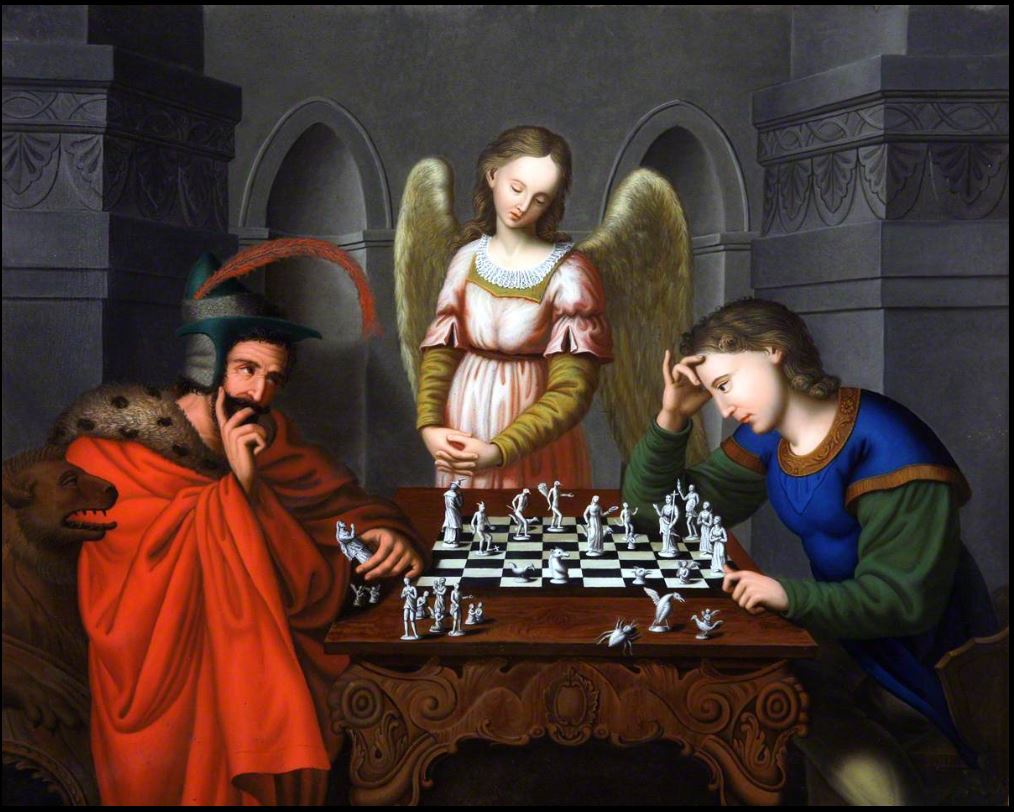
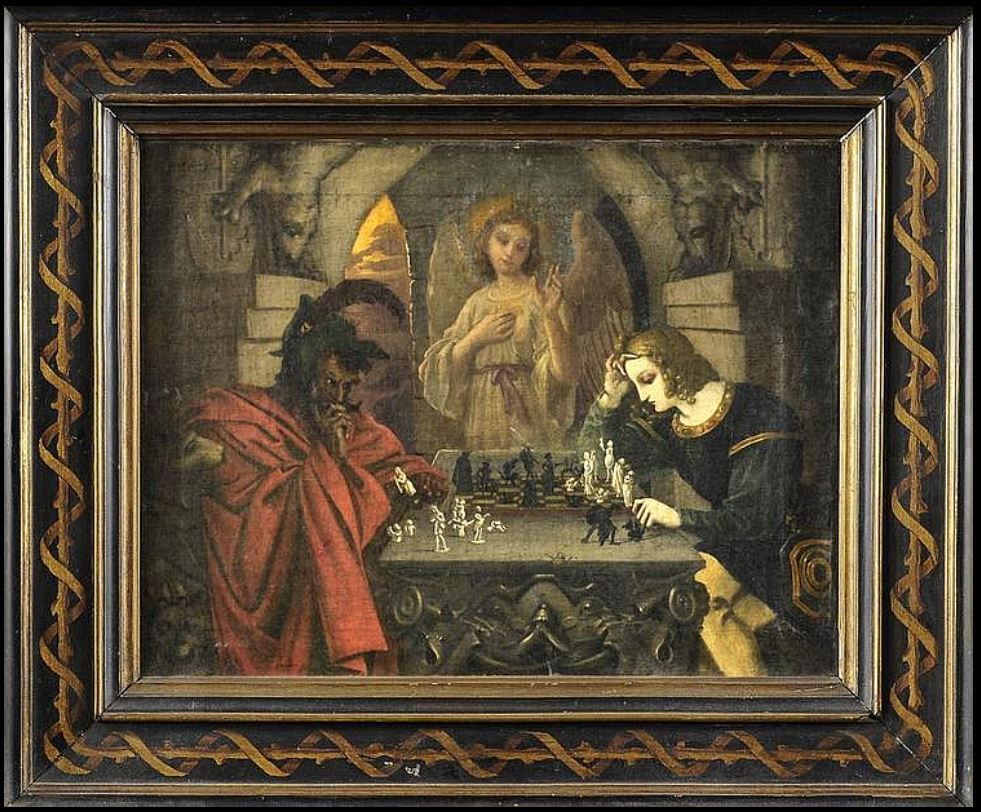
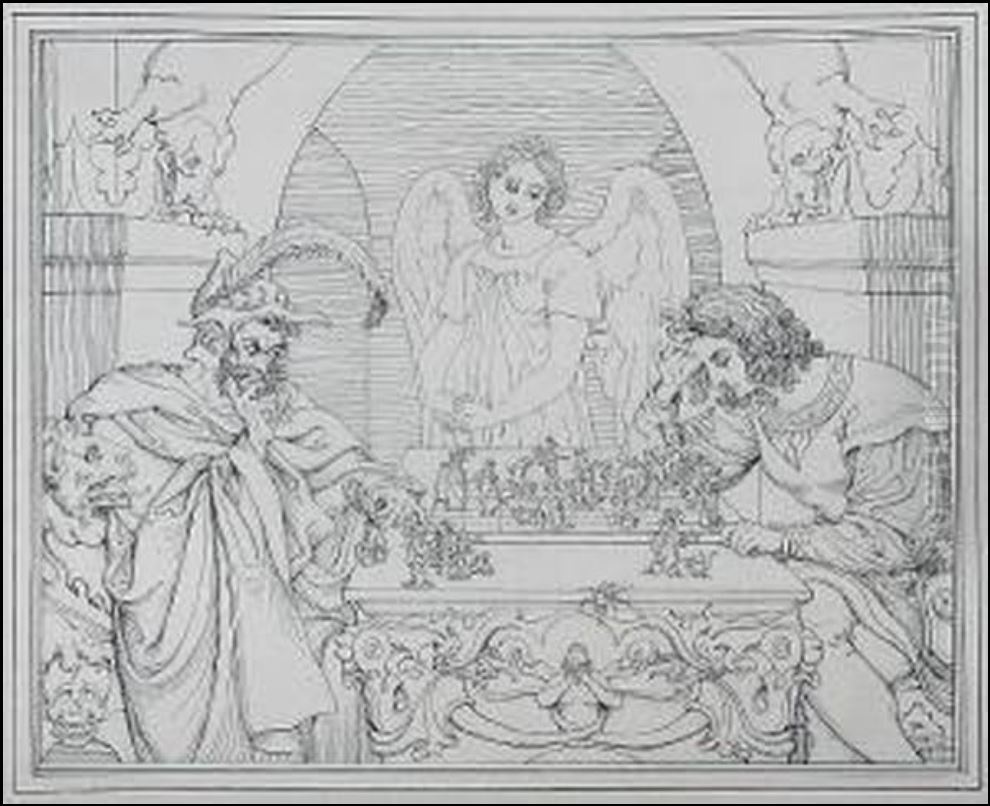
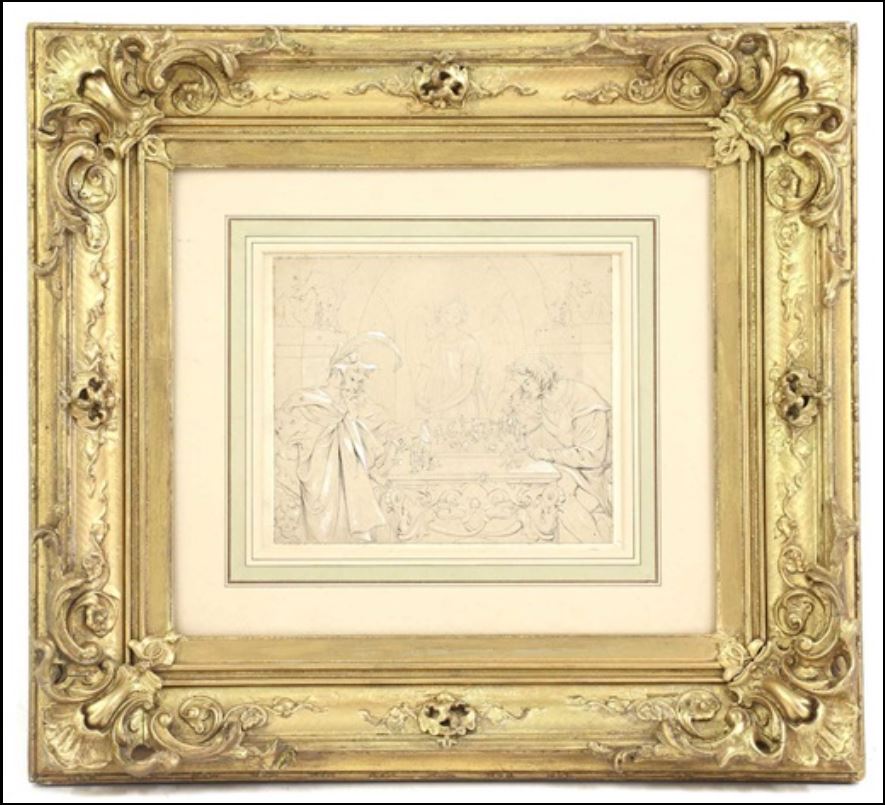
I pulled up several images of the prints and carefully analyzed the board. I was surprised to find that the board itself is accurate: a regular 8×8 chessboard. The man is playing with the white pieces, which all appear to be angelic figures. The king himself has wings and holds a cross, extending his hand forward as if trying to resist the forces closing in on him. The Devil plays with the black pieces, and they all appear to be figures of grotesque demons and monsters. How fitting, right? Even his queen is depicted as a temptress with her exposed breasts, adding another layer of symbolism to the image. The entire board becomes a battlefield between good and evil.
But my main interest was in the positions of each chess piece on the board. After carefully observing each figure and doing my best to determine which one corresponded to each actual chess piece, this is what I found.
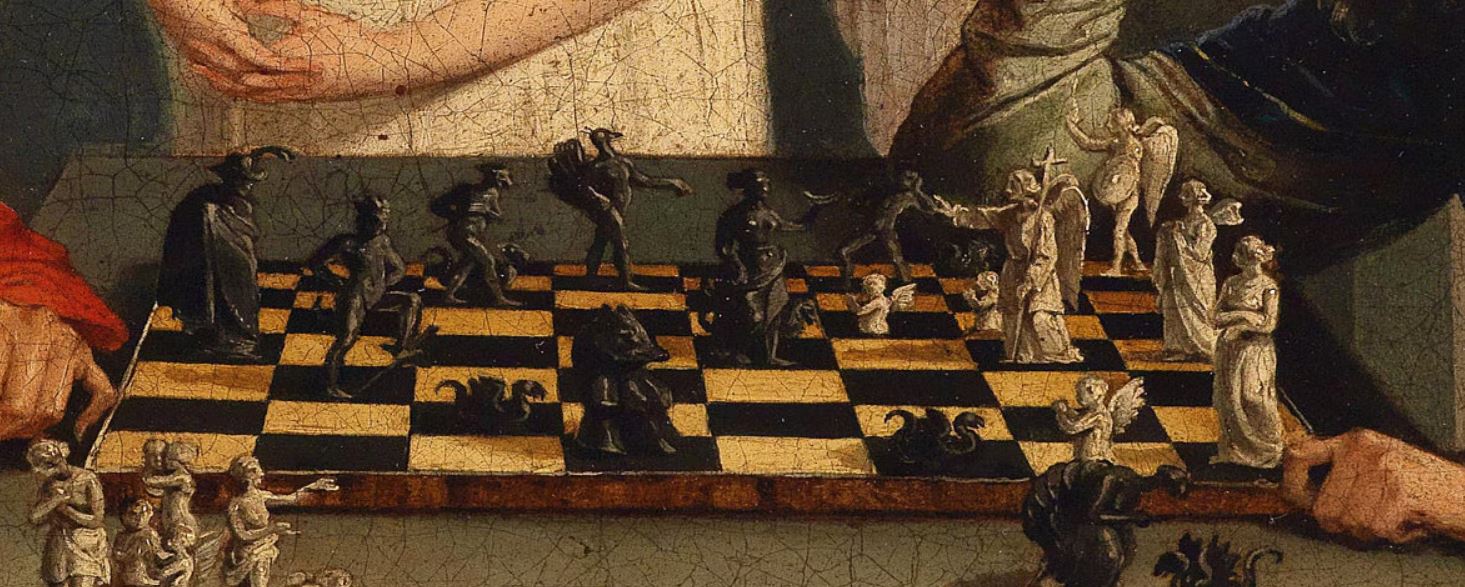
It appears the king does indeed have one more move: he can retreat to a diagonal square behind him. The Devil’s queen appears to be on d4 while the man’s king appears to be on d2. The Devil’s pieces are strategically arranged so that it looks as if the king is already in checkmate, but a square behind him, c1, is free. Another square, e1, also appears to be open, but if you look closely, what I assume is the Devil’s bishop on g3 would place the king in check if he moved there. So the king can retreat to c1. But that square is a trap.
Two of the man’s own pieces already stand on either side of c1, hemming him in. All the Devil has to do is move his queen to b2, and then it becomes a true checkmate. Even if it appears that the man could capture the queen with his king, the Devil’s pawn, represented in the image by a small snake-like dragon on a3, would capture the king immediately afterward, making that move impossible. So it appears the painter was correct in his depiction. The man is trapped.
It also seems to be his turn to move. He leans over the board, thinking, while the Devil reclines in his chair and watches with a satisfied grin, already knowing his opponent is doomed.
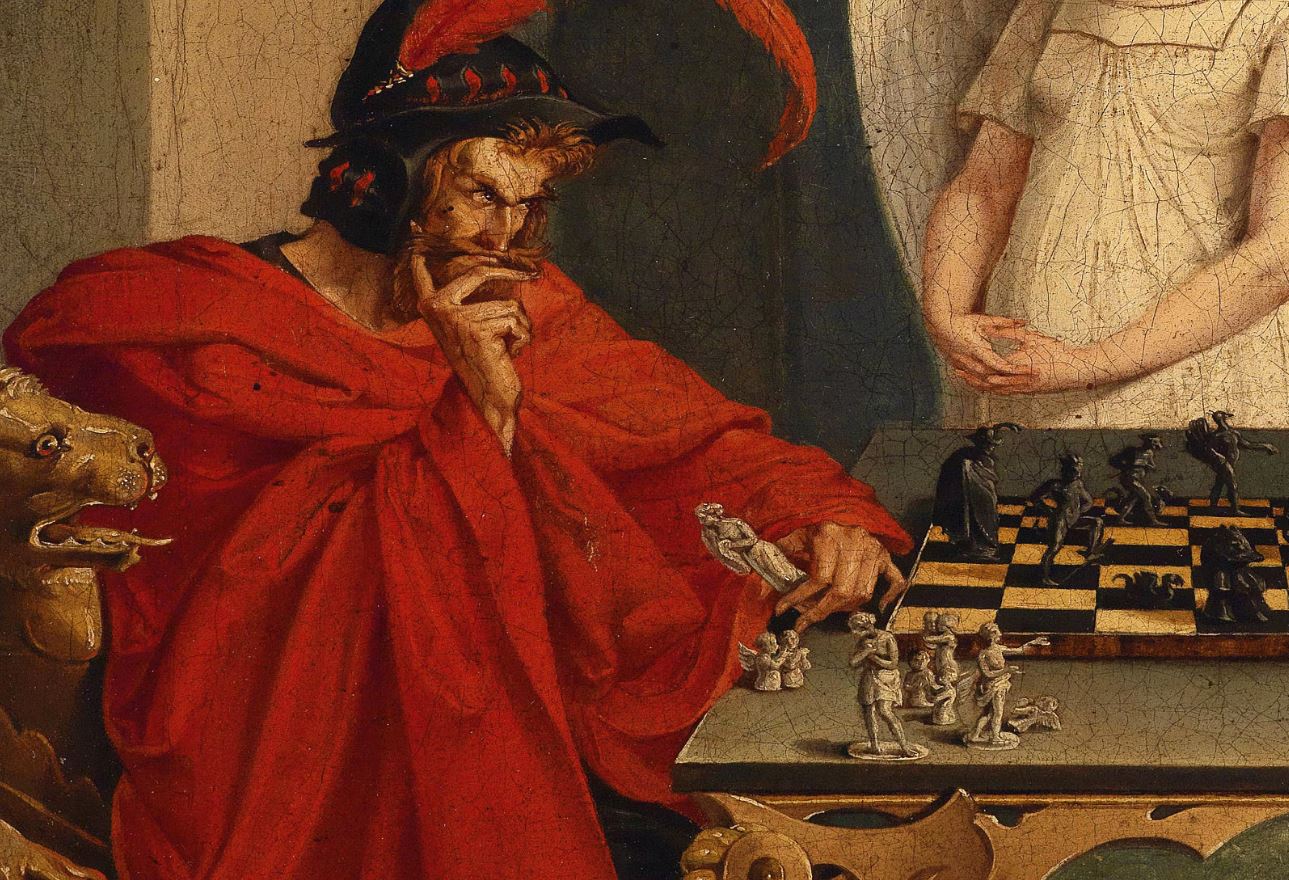
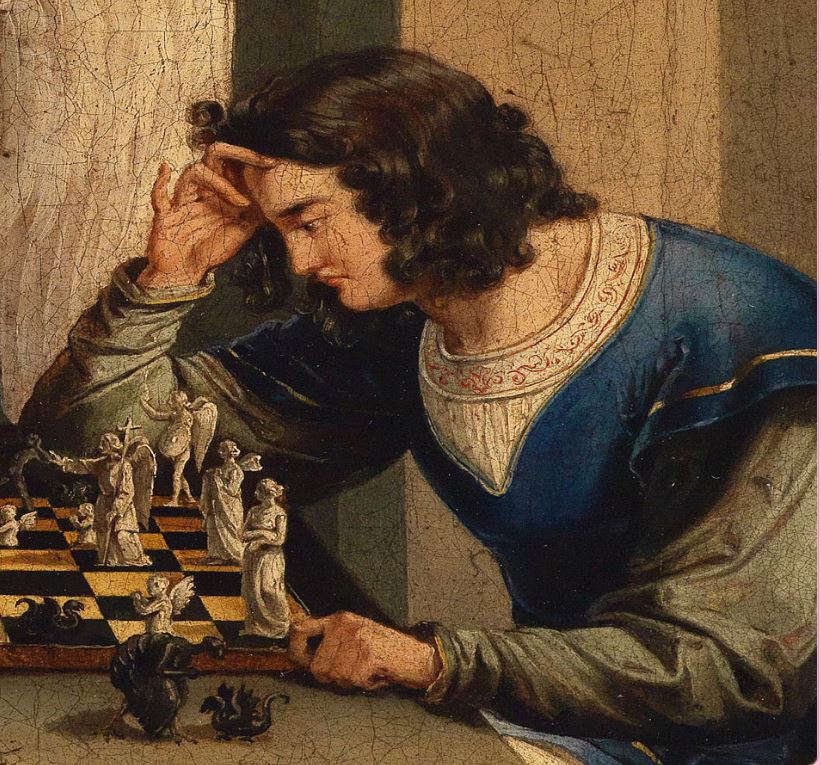
It’s a brilliant work of art! If there is any truth to this story, the chess master was right, but the story is incomplete. There is no hope. Even the angel seems to know this by her saddened face at the man’s predicament.
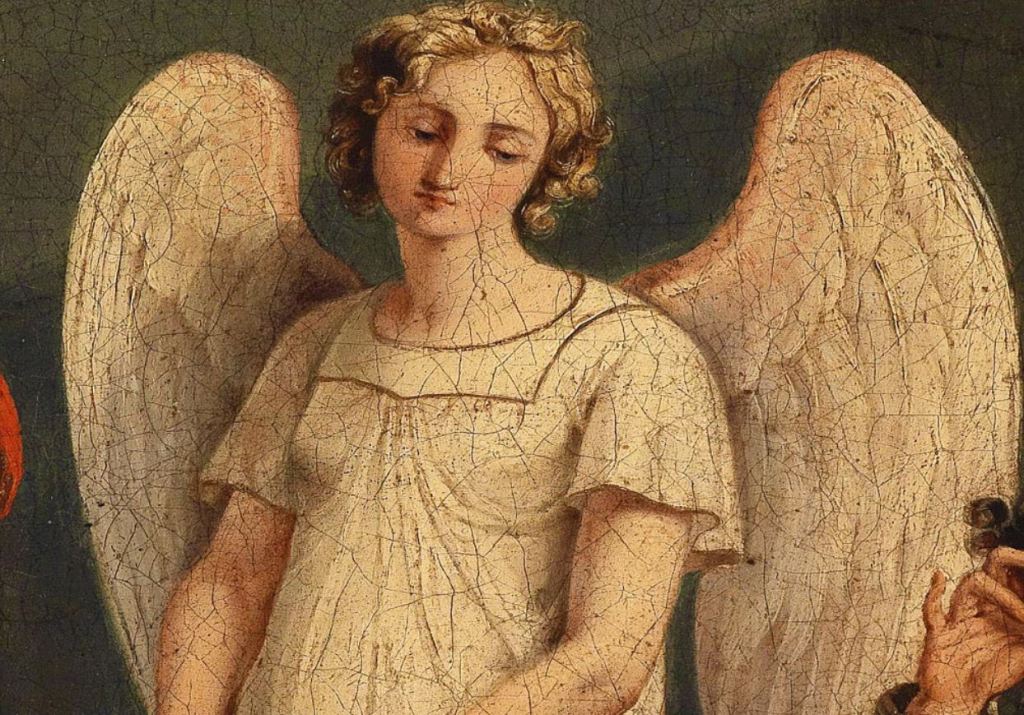
The angel’s presence is interesting. Why is she there? Is the man’s soul already forsaken? Or, is she the true symbol of hope? Or, perhaps, did she come to warn the man not to make any deals with the Devil, for he is a deceitful creature who will lead him to perdition. Perhaps the man didn’t heed her word. Perhaps, he obeyed his ego more than his faith, and the Devil took advantage of that human weakness, and when it comes to the Devil, that’s usually the way it goes.
 My Foolish Quest to Get Published